

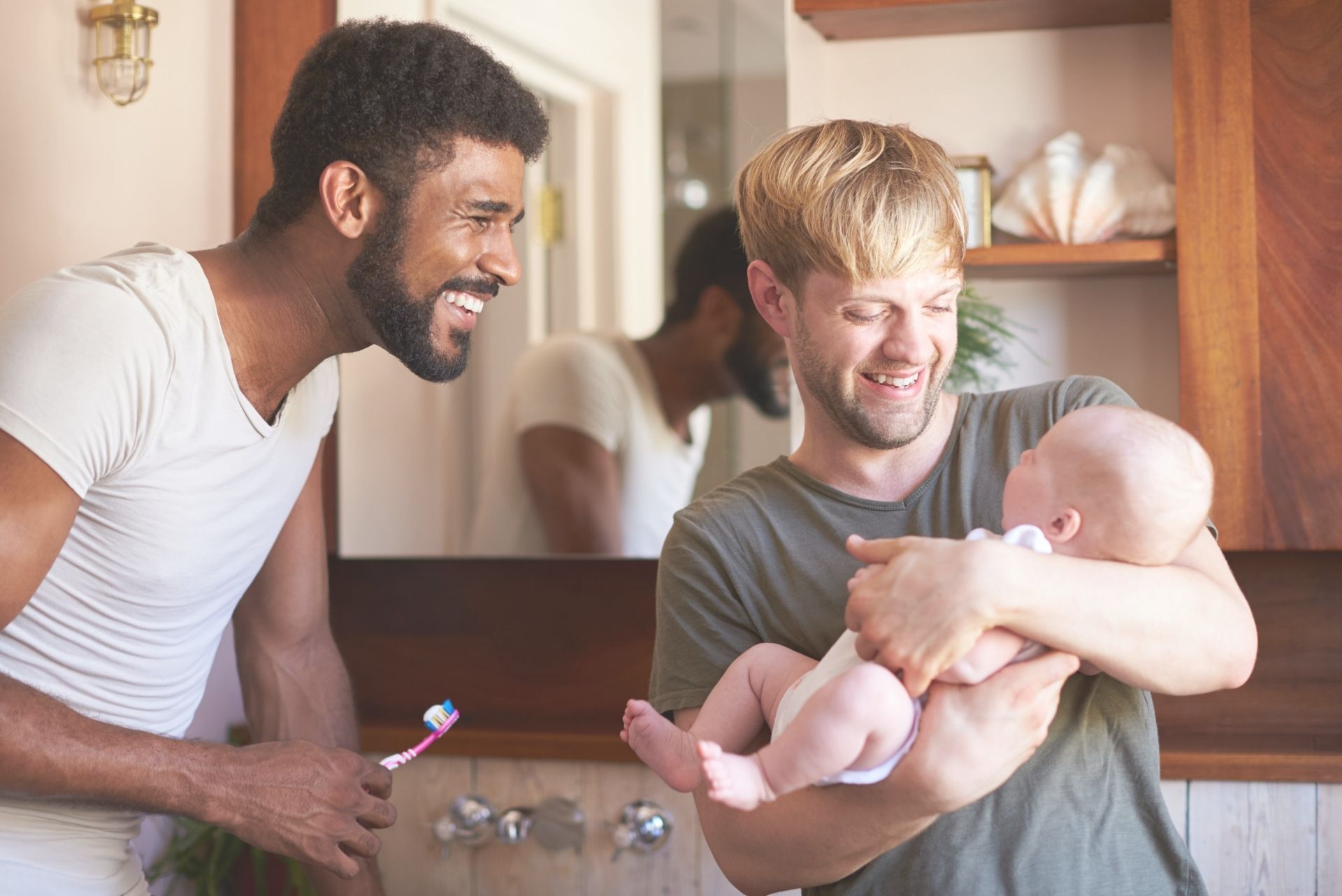
Fathers and father figures play an important role in the lives of children, offering guidance, support, and a sense of stability. Through everyday moments— whether playful, challenging, or routine—they help shape children’s confidence, resilience, and overall well-being.
As we take time to celebrate and support dads, it’s important to recognize the many ways they show up for their families. Fathers and father figures— including stepdads, uncles, grandfathers, and caregivers—help create a strong foundation of care, connection, and belonging that can last a lifetime.
Dear Yesenia,
My partner and I just adopted two siblings – a 3-year old boy and an 10-month old girl. We’ve always wanted to be dads but we’re total newbies. Neither of us had good role models when we were growing up. We want things to be different with our kids, but we don’t know what we’re doing. Got any tips for us?
- Mathew
Dear Mathew,
Congratulations on becoming dads! Fathers and father figures play a critical role in children’s wellbeing, but it still takes time, practice, and patience to be the kind of dad you want to be. That’s because parenting is hard work and children don’t come with an instruction manual! Here are some tips to try: Spend quality time with your children every day. Find moments throughout the day to give them your undivided attention and affection. Turn everyday tasks such as changing diapers, eating meals, and getting dressed into quality time by giving a hug, smiling, or talking with them. This kind of brief and frequent quality time lets your children know you love and care for them, and that you’re available when they need you. This is the foundation for positive relationships throughout life.
Do engaging activities together. This is another way to spend quality time together while encouraging learning, curiosity, creativity, and skill-building. Read books, play games, go on walks, make meals together – these are all things you can do with your children at any age that will become the basis of their happy childhood memories. Do activities that your children are interested in and follow their lead. And yes, this could mean playing endless games of peek-a-boo or reading the same book a million times. Also introduce them to activities you and your partner enjoy to expand their horizons and bond as a family.
Work as a team with your partner. Talk with your partner about the family rules and expectations that matter to both of you, including how you will handle discipline. This will help make sure you’re on the same page as a parenting team before challenges occur. Make time for you and your partner to talk and connect. It’s easy to get consumed by daily responsibilities and forget to take care of the relationship, but remember that parenting is easier and more enjoyable when you’re a strong team.
Be the role model you wish you’d had. Your children are constantly learning by watching and listening to the way you communicate with others, handle emotions, and solve problems – even when it seems like they’re not paying attention to you. Teach and model the behaviors you want your children to learn – including how to express emotions, give affection, listen, cooperate, and take care of your mental health – and they’re more likely to learn those skills, too.
Final Thoughts: Being a loving, nurturing, supportive father or father figure supports children’s self-esteem, emotional resilience, social skills, and school readiness, and increases their chances of success in school and other activities throughout life. And dads who are actively involved in their children's lives often report increased happiness and fulfillment. That’s a win-win that deserves to be celebrated!
EN ESPANOL
Los padres y las figuras paternas desempeñan un papel importante en la vida de los niños, ofreciendo orientación, apoyo y un sentido de estabilidad. A través de los momentos cotidianos—ya sean durante el juego, o en situaciones desafiantes o rutinarias—ellos ayudan a formar la confianza, la resiliencia y el bienestar general de los niños. Mientras nos tomamos el tiempo para celebrar y apoyar a los papás, es importante reconocer las muchas formas en que están presentes para sus familias. Los papás y las figuras paternas —incluidos padrastros, tíos, abuelos y cuidadores— ayudan a crear una base sólida de cariño, conexión y pertenencia que puede durar toda la vida.
Estimada Yesenia,
Mi pareja y yo acabamos de adoptar a dos hermanos: un niño de 3 años y una niña de 10 meses. Siempre hemos querido ser padres de familia, pero no tenemos experiencia en esto. Ninguno de los dos tuvimos buenos modelos a seguir cuando estábamos creciendo. Queremos que las cosas sean diferentes con nuestros hijos, pero no sabemos lo que estamos haciendo. ¿Tiene algún consejo para nosotros?
- Mathew
Estimado Mathew,
¡Felicidades por ser papás! Los padres y las figuras paternas tienen un rol fundamental en el bienestar de los niños, pero aun así se necesita tiempo, práctica y paciencia para ser el tipo de padre que quiere ser. ¡Eso es porque ser padre es un trabajo duro y los niños no vienen con un manual de instrucciones! Aquí tiene algunos consejos para probar:
Pase tiempo de calidad con sus hijos cada día. Busque momentos a lo largo del día para darles toda su atención y cariño. Convierta las tareas cotidianas como cambiar pañales, comer y vestirse en tiempo de calidad dándoles un abrazo, sonriendo o hablando con ellos. Este tipo de tiempo breve y frecuente de calidad hace que sus hijos sepan que los quiere y se preocupa por ellos, y que está disponible cuando le necesiten. Esta es la base para relaciones positivas a lo largo de la vida.
Hagan actividades divertidas juntos. Esta es otra forma de pasar tiempo de calidad juntos mientras se fomenta el aprendizaje, la curiosidad, la creatividad y el desarrollo de habilidades. Lean libros, jueguen, salgan a pasear, preparen comidas juntos: todas estas son cosas que puede hacer con sus hijos a cualquier edad y que serán la base de sus felices recuerdos de infancia. Hagan actividades que interesen a sus hijos y sigan la iniciativa de ellos. Y sí, esto podría significar jugar a interminables juegos de escondite o leer el mismo libro un millón de veces. También presénteles actividades que disfrutan usted y su pareja para ampliar sus horizontes y crear lazos familiares.
Trabaje en equipo con su pareja. Hable con su pareja sobre las normas familiares y las expectativas que importan a ambos, incluyendo cómo van a manejar la disciplina. Esto ayudará a asegurar de que estén en sintonía como equipo de crianza antes de que surjan desafíos. Tomen el tiempo para que usted y su pareja hablen y se conecten. Es fácil dejarse consumir por las responsabilidades diarias y olvidarse de cuidar la relación, pero recuerde que ser padre es más fácil y agradable cuando son un equipo fuerte.
Sea el modelo a seguir que desearía haber tenido. Sus hijos están aprendiendo constantemente observando y escuchando cómo se comunica con los demás, maneja las emociones y resuelve problemas, incluso cuando parece que no están prestando atención. Enseñe y modele las conductas que quiere que sus hijos aprendan —incluyendo cómo expresar emociones, dar afecto, escuchar, cooperar y cuidar su salud mental— y es más probable que también aprendan esas habilidades.
Reflexiones finales: Ser un padre o figura paterna cariñosa y solidaria apoya la autoestima, la resiliencia emocional, las habilidades sociales y la preparación escolar de los niños, y aumenta sus posibilidades de éxito en la escuela y en otras actividades a lo largo de la vida. Y los padres que participan activamente en la vida de sus hijos suelen sentirse más felices y realizados. ¡Esa es una situación en que todos ganan y que merece ser celebrada!